Showing posts with label Maladie D'Amour. Show all posts

Saturday, June 27, 2026

Shooting Kinski: Jean-Francois Robin


Born in France during World War Two, Cinematographer Jean-Francois Robin has had a fascinating four decade career behind and in front of the camera. The Cesar nominated Robin got his start in French film in the early seventies on a couple of horror shorts. He made his feature film debut as cinematographer on the legendary Jean Rollin’s haunting and influential Lips Of Blood. Robin’s excellent work for Rollin would mark him as one of the most talented, if lesser known, photographers that came out of French cinema in the seventies and his work has only improved since.
Like most of Rollin’s greatest works, Lips Of Blood didn’t make much of a splash at the time so Robin wasn’t able to immediately capitalize on his excellent work on it. He spent the rest of the seventies and early eighties shooting a variety of relatively minor French films for directors like Alain Cavalier and Patrice Leconte before landing a huge assignment for famed Polish director Andrzej Zulawski with 1985’s L’Amour Braque in which he was able to photograph Sophie Marceau.
The demanding Zulawski got the best out of Robin and his work on L’Amour Braque received a lot of attention from critics and other directors. One director who was most impressed by it was Jean-Jacques Beineix who was prepping his follow up film to Moon In The Gutter, 1986’s Betty Blue. Robin was hired for Beineix’s iconic and popular film and immediately became one of the most sought after French cinematographers due to his work on it.
Maladie D’Amour would be one the first films that Robin began shooting after completing his work for Beineix on Betty Blue and it is also one of his best. Like a lot of key French films from the eighties, his work was an intriguing mix of stylish ‘cinema du look’ inspired video photography mixed with a rich film tradition from many of the sixties best photographed works. With some ingenious lighting and a deceptively simple style, Maladie D’Amour benefits greatly from Robin’s work and Nastassja looks fantastic through his lens.
Robin would continue to work with Beineix on his next couple of films and also struck up a partnership with the great Claude Sautet. This collaboration would prove to be a fruitful one and it produced the career best work of both men, the glorious 1995 film Nelly and Monsieur Arnaud.
Robin continues to be a successful cinematographer and has even acted in a couple of films for some of his directors. Maladie D’Amour would unfortunately mark the only time Robin and Nastassja would work together, but he can rightly claim to be one of her key cinematographers as he caught her at one of the most pivotal moments in her career.

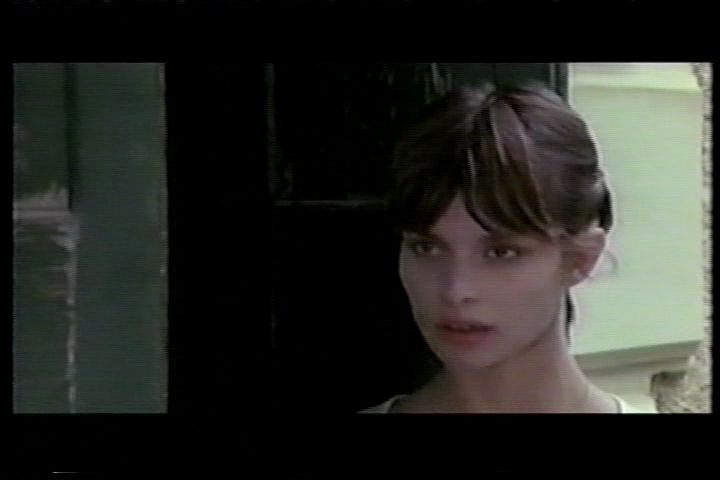
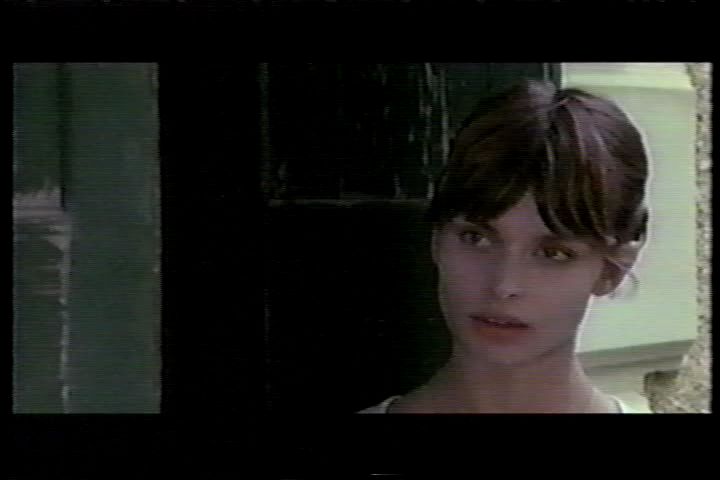
Maladie D'Amour Exclusive Screenshots

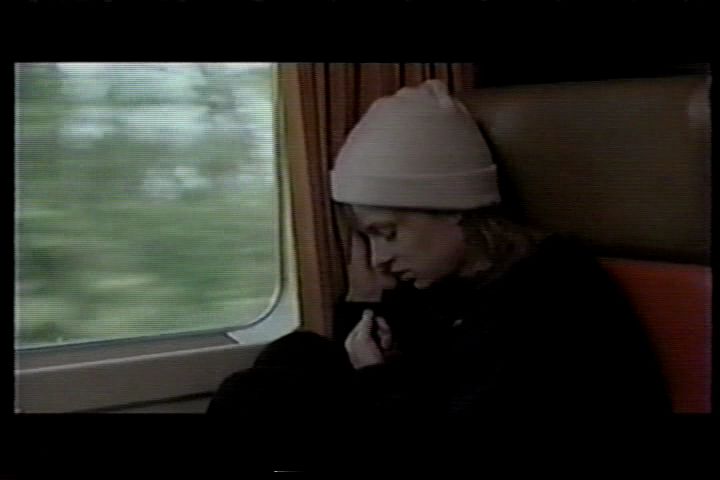
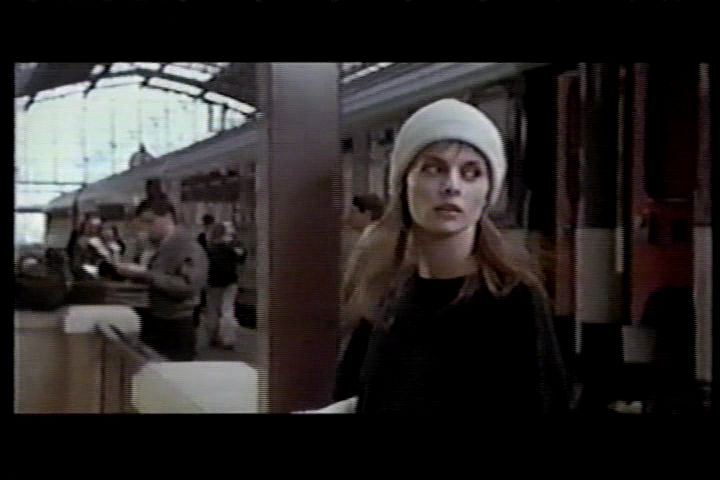
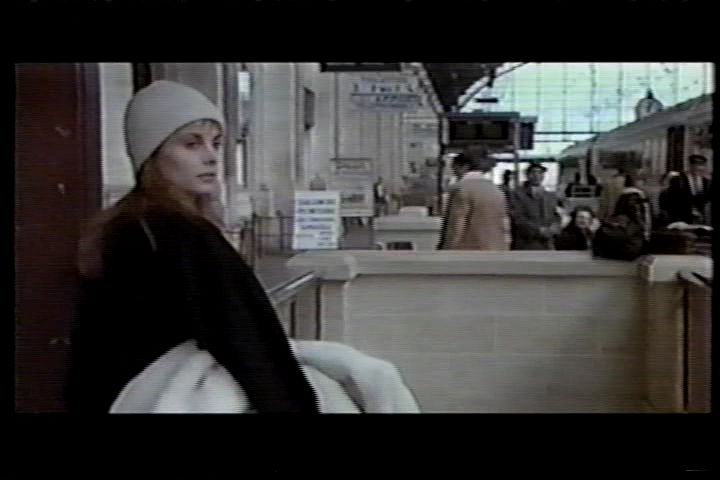
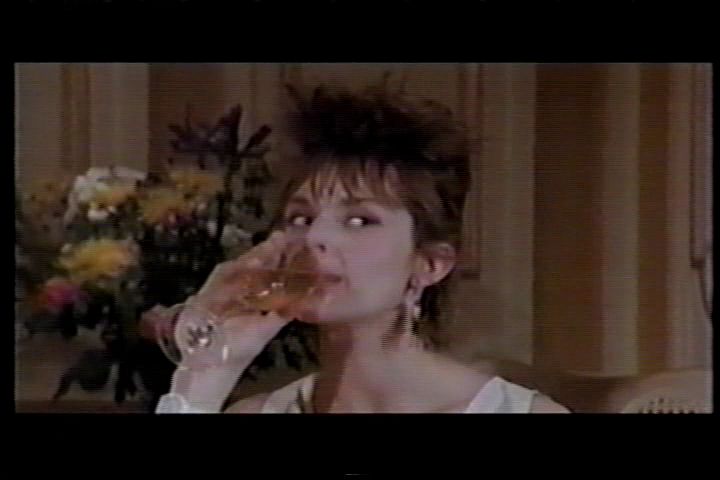
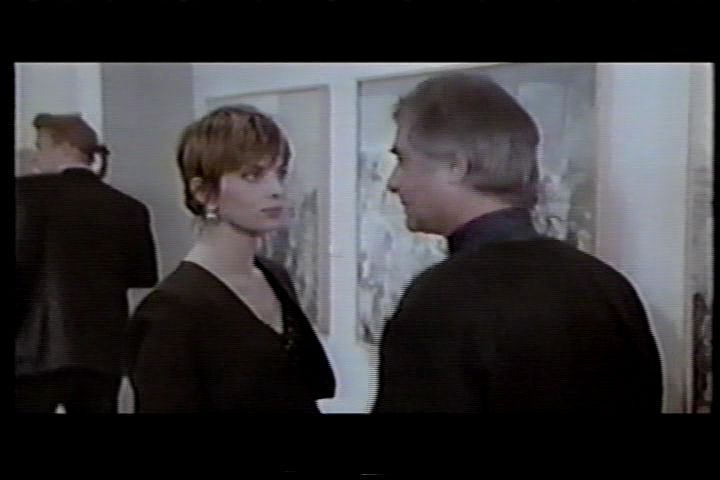
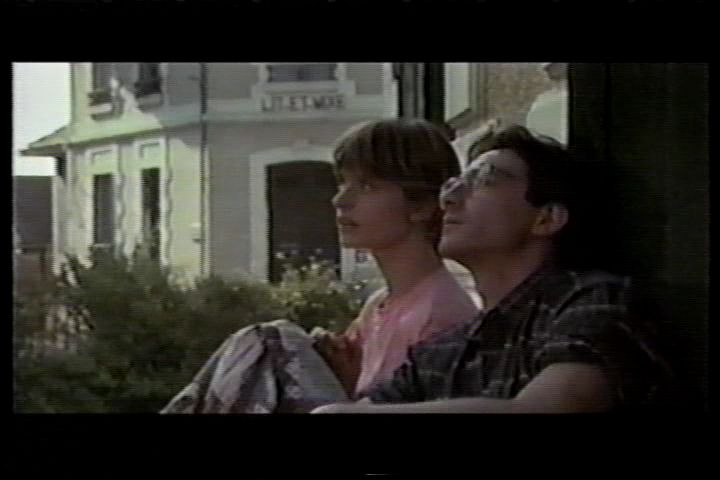
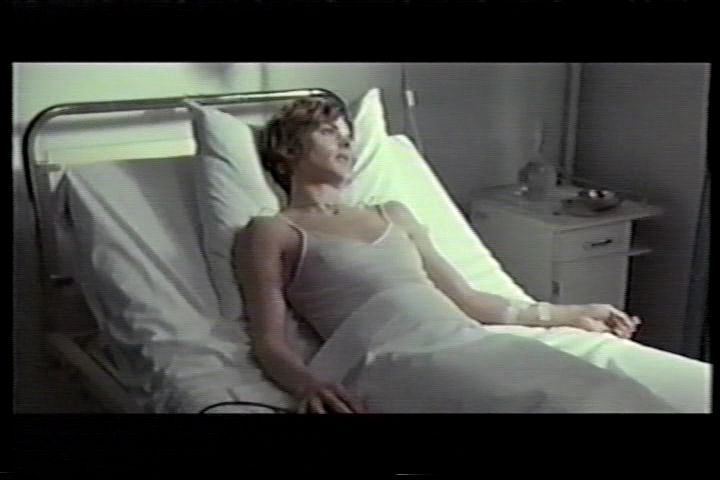
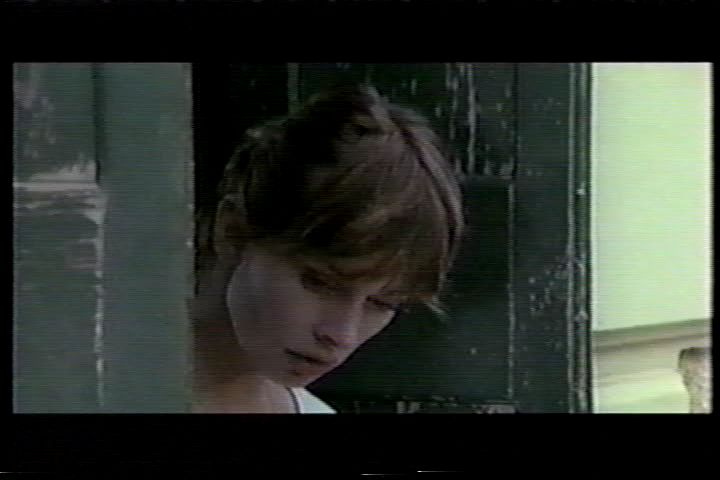
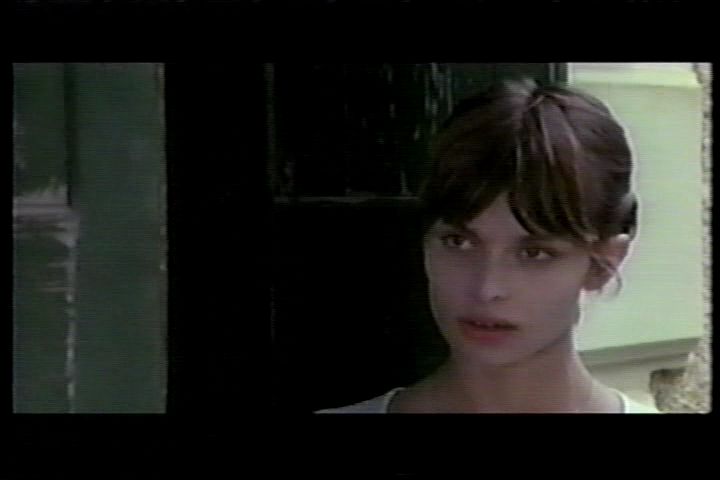
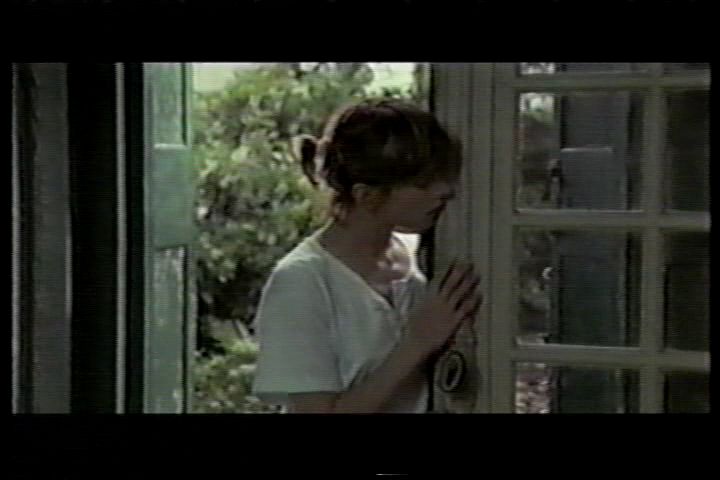
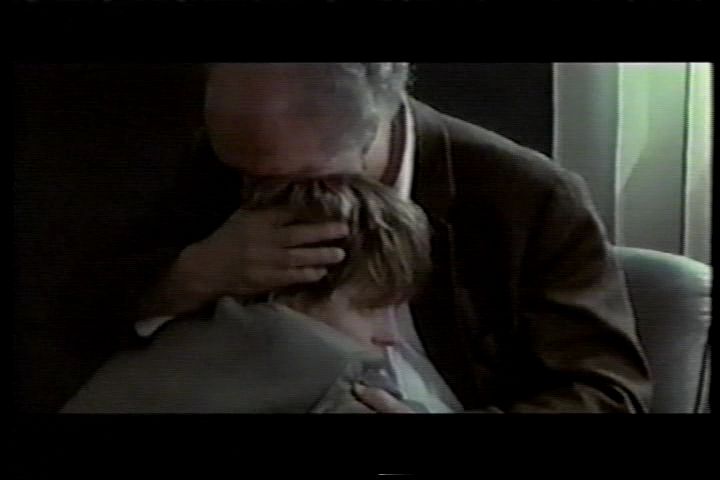
Recently I got the capability to create my own screenshots so I will be offering more exclusive images for readers to enjoy. Here are the first batch of MALADIE D'AMOUR captures. I will be offering more when I write on the film in detail later this week. Please excuse the quality of these. This is a very rare film and my copy comes from an old VHS tape.


Soundtrack: Maladie D'Amour


It looks as though the soundtrack to Maladie D’Amour was indeed released in France upon the film’s release in 1987. I have unfortunately not been able to find any other information on it and as such can’t really write on it in depth. I do quite like much of the music in the context of the film, although it does suffer from the same overly glossy production that plagued a lot of music in the mid to late eighties.
Romano Musumarra was born in Rome in the summer of 1956. Even though he was born in the year that Rock and Roll first exploded, it appears that Musumarra has always been more interested in classical and pop. A child prodigy on the piano, Musumarra scored his first Italian hit just before his 20th birthday with the track, “La Bottega delll’Arte”.
He found a lot of work in the late seventies and early eighties as a composer and arranger for many Italian and then French acts, including Jean Mas’ first two albums. 1986 marked the first year that he began his film work with a song for Andre Techine’s terrific Scene Of The Crime and his first full film score for Regis Wargnier’s Women Of My Life.
These popular works would lead him to a dozen or so different productions ranging from a song for Jess Franco’s Faceless (1988) to a couple of complete scores for films from Jacques Deray including, of course, Maladie D’Amour.
Musumarra provides Maladie D’Amour with a solid if not completely memorable score. I would be most curious to hear the complete soundtrack on its own as my opinion of it might rate higher then. Visit Romano’s official website here for much more information.

Nostalgia Kinky Lands In Wikio's Top 100


I was notified yesterday that Nostalgia Kinky and Moon And The Gutter are ranked among the top 100 film blogs according to Wikio's rankings page. Apparently this ranking is determined by the amount of sites and other blogs linking directly to both so I really appreciate all that have done so. I have added the little award logo to the side of the page.
My review of MALADIE D'AMOUR will be posted very soon. My apologies on the lack of posting on it but finding material has proven most difficult.

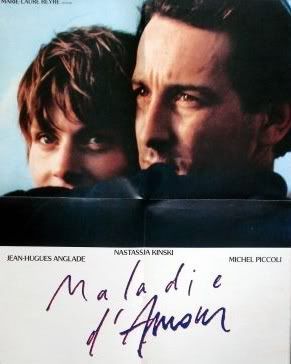
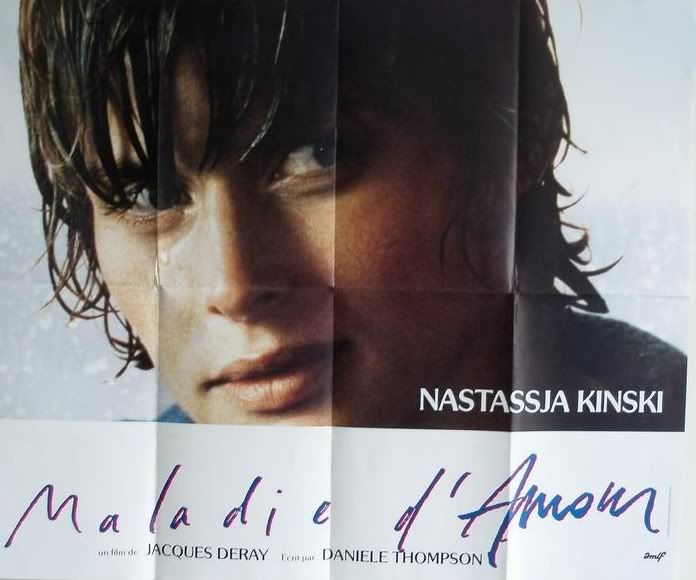
Maladie D'Amour Poster Designs


19. Maladie D'Amour


Maladie D’Amour is a good film made great by four exceptional performances from by Michel Piccoli, Jean-Claude Brialy, Jean-Hughes Anglade and especially Cesar nominated Nastassja Kinski. If the film itself isn’t finally one of French director’s Jacques Deray’s finest, it is at least an absolute must for fans of Kinski, which makes its troubled distribution history all the more frustrating.
After the disastrous Revolution, Nastassja dropped out of sight for a couple of years. Maladie D’Amour marked her return to the big screen and it also marked the beginning of her first European phase away from Hollywood. Her risky move would be rewarded with the previously mentioned Best Actress nomination and a whole slew of European critical acclaim, but unfortunately her American fans have had to put up with just import copies or not seeing the film at all as it has never had a Stateside release.
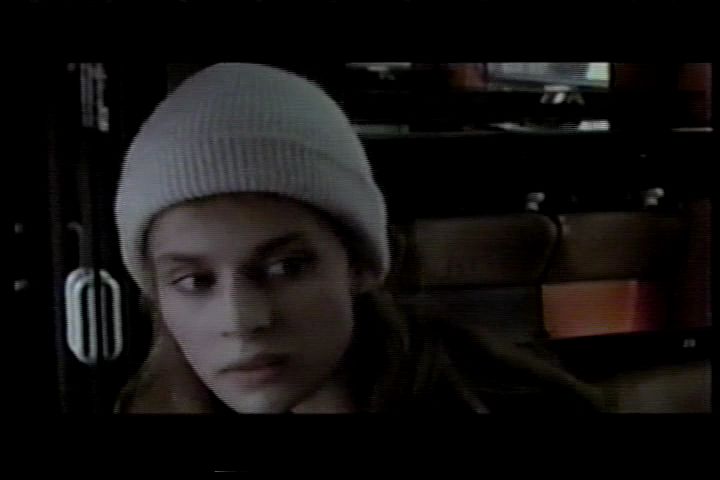
The talented Deray was nearing sixty when he shot Maladie D’Amour in the early part of 1987. The award-winning director had begun his career as first an actor in French film in the early fifties before becoming an Assistant Director by the end of that decade. He shot his first feature in 1960, The Gigolo, and would become one of the most prolific French directors of the next few decades, working in nearly every conceivable genre. While never gathering the acclaim or respect of some of his peers, Deray’s best films (such as the films he made with Alain Delon) are really special and noteworthy.
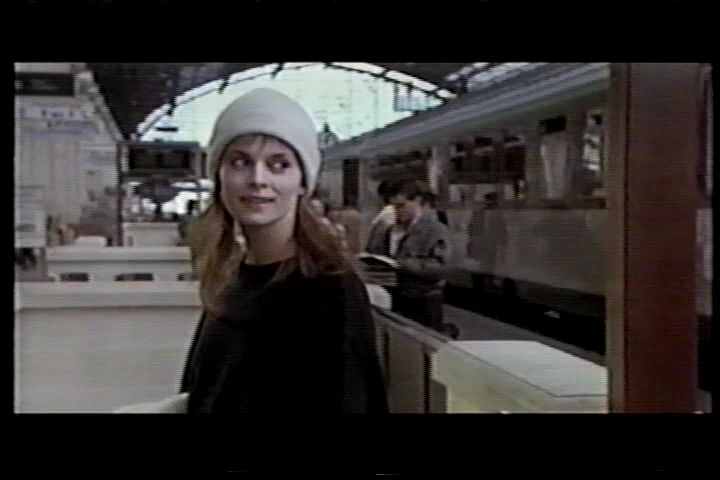
Nastassja’s male co-stars in the film are some of the finest she ever got to work with. Piccoli and Brialy are bona-fide legends to European film fans and I can imagine Nastassja, who would have grown up watching many of their best films, must have been quite honored to work with them. The late and much missed Brialy is especially good in a smaller role in the film. Anglade has become one of France’s most respected actors but in the mid eighties he was still mostly just connected with his ‘Cinema du Look’ appearances in such wonderful productions as Luc Besson’s Subway (1985) and Jean-Jacques Beineix’s smashing Betty Blue (1986). His work here opposite Piccoli and especially Kinski shows him to be one of the finest actors to come out of France’s second new wave.
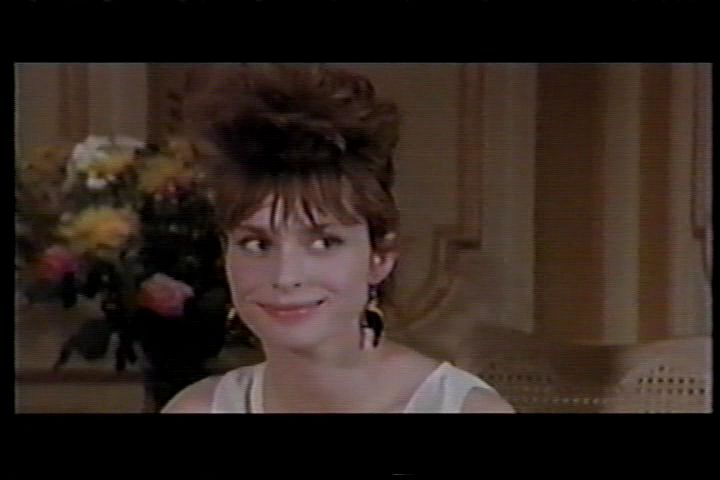
Maladie D’Amour, which centers on a love triangle between a young hairdresser and two doctors, sprang from the mind of Oscar nominated writer Daniele Thompson and if the story for the film is a bit clichéd Thompson’s dialogue is still fairly rich. Thompson got her start as a writer in the mid sixties but didn’t really catch fire with the public and critics until the early eighties with a series of films she wrote for young Sophie Marceau. Thompson’s career would take a surprising turn in the late nineties when she would turn to her attention to the director’s chair with the really wonderful La Buche. She is currently working on a much anticipated new film entitled Le Code a Change with Emmanuelle Seigner and is developing rapidly as one of the key female directors in modern film.
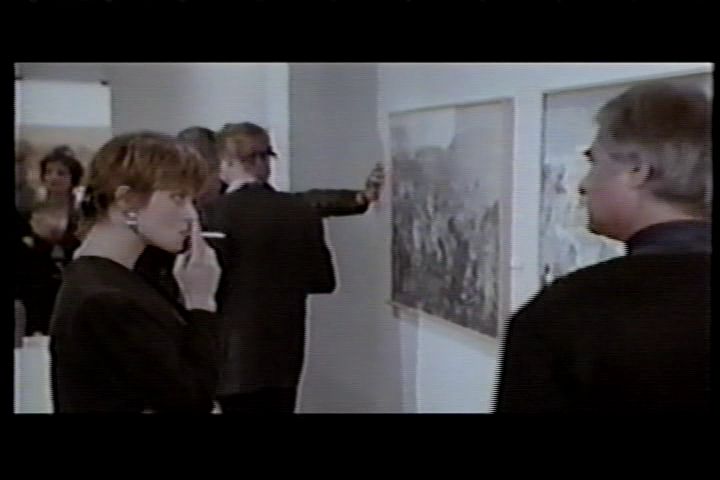
Maladie D’Amour is a very handsome production that is bogged down a bit by the period that produced it. Cinema du Look had been so overwhelmingly influential by 1987 that it seemed like for a brief period nearly every film coming out of France had a glossy sheen over it, even when the material didn’t necessarily call for it. So whereas a film like Subway still feels incredibly alive, Maladie D’Amour seems a bit dated. One wishes a more low key and simple touch, which isn’t to take away from the work Deray or cinematographer Jean-Francois Robin, as it would have suited the film a bit more.
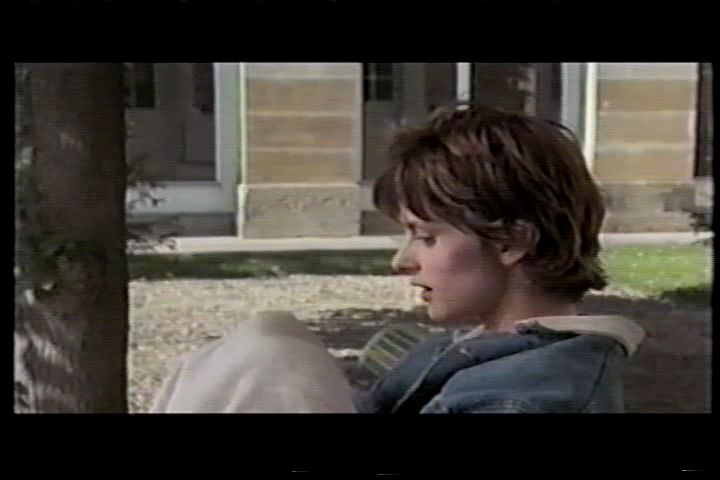
Thompson’s storyline is also a bit troubling. While her dialogue and ideas are strong, the film ultimately feels more than a little passé, especially in the second half when a particular secret about Kinski’s character is revealed. Still, all of this is just nit picking as the work in front of the camera is so strong that the minor problems the film has almost vanish.
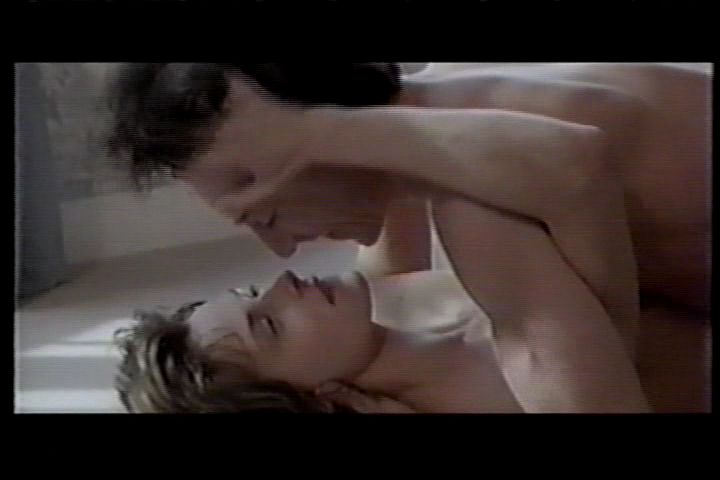
Maladie D’Amour is finally more than anything else very much an actor’s film. The film is one of the strongest acting pieces of the late eighties as all of the performances here are filled with so much subtlety and depth that one wishes they were all granted Cesar nominations.
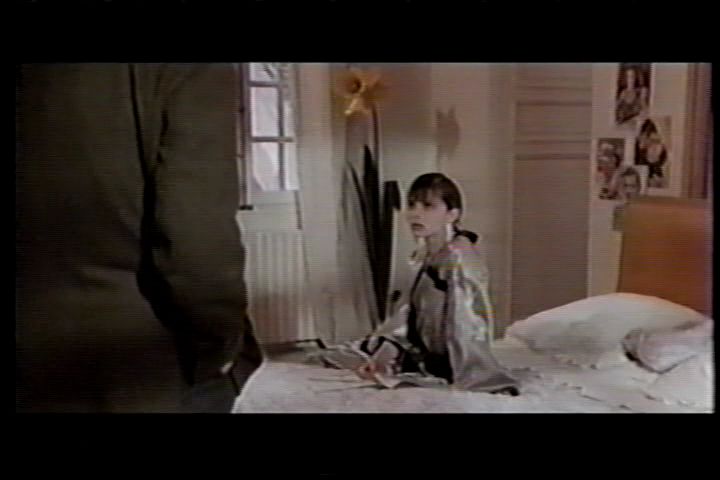
Maladie D’Amour is a key film in the career of Nastassja Kinski as it was one of the first where she gives notice to the wonderful character actor she has become. Thinner and a little less electric than she had ever appeared before in a film, she disappears wonderfully into her role and some of the finest work of her career can be found in this film.
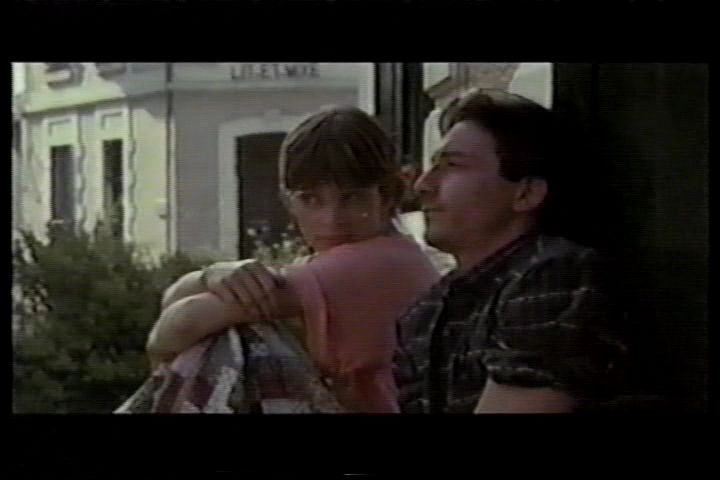
Maldie D’Amour would hit French screens in the fall of 1987 to solid critical acclaim for the most part and fairly healthy business. The film’s failure to secure an American release is troubling and extremely unfortunate. My copy comes from a widescreen subtitled import VHS and isn’t in the best shape. I am aware of a Japanese DVD release but have had no confirmation as to its print quality or if it has an English subtitle option. Any further information on DVD releases of the film would be most appreciated.
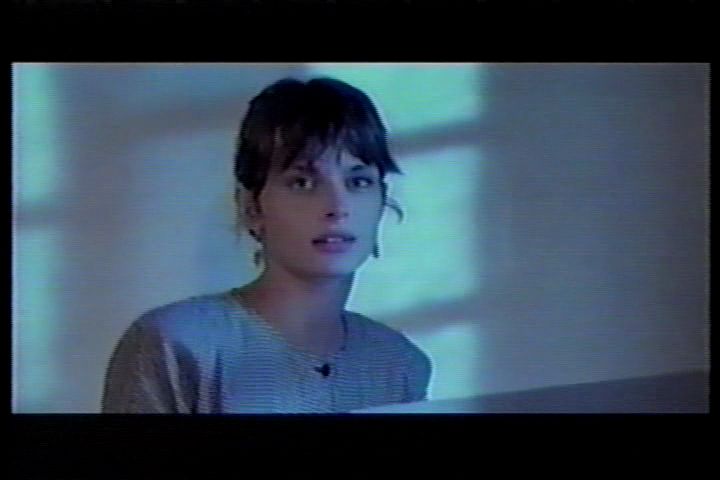
Maladie D’Amour is one of the great secrets in Nastassja Kinski’s filmography to many of her American fans. One hopes it will eventually get a Stateside release so more people can have the opportunity to see this flawed but still special little film.
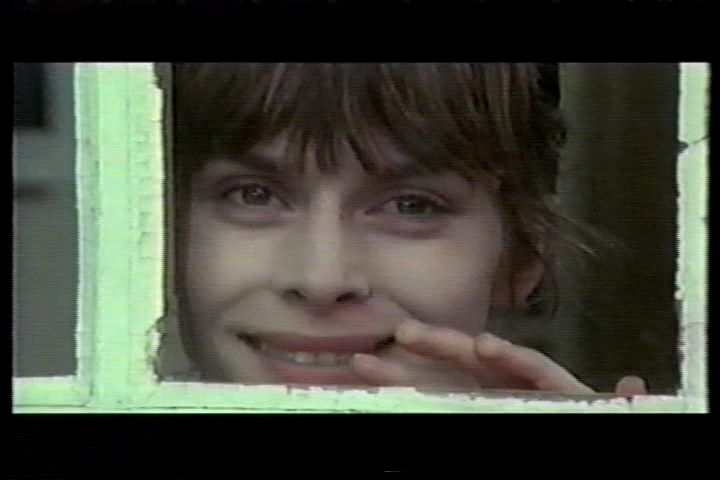
Maladie D'Amour: Odds and Ends

Maladie D'Amour was an extremely difficult film to find any material on so I don't have much more to add here. I will just let these wonderful images from the movie, where Deray seems to pay tribute to Nastassja's work in Polanski's Tess, close out my look at the film.


My look at Magdalene will began soon.